Vancouver Climate Futures
Place-based climate serious game · cited City of Vancouver data · two-condition evaluation design
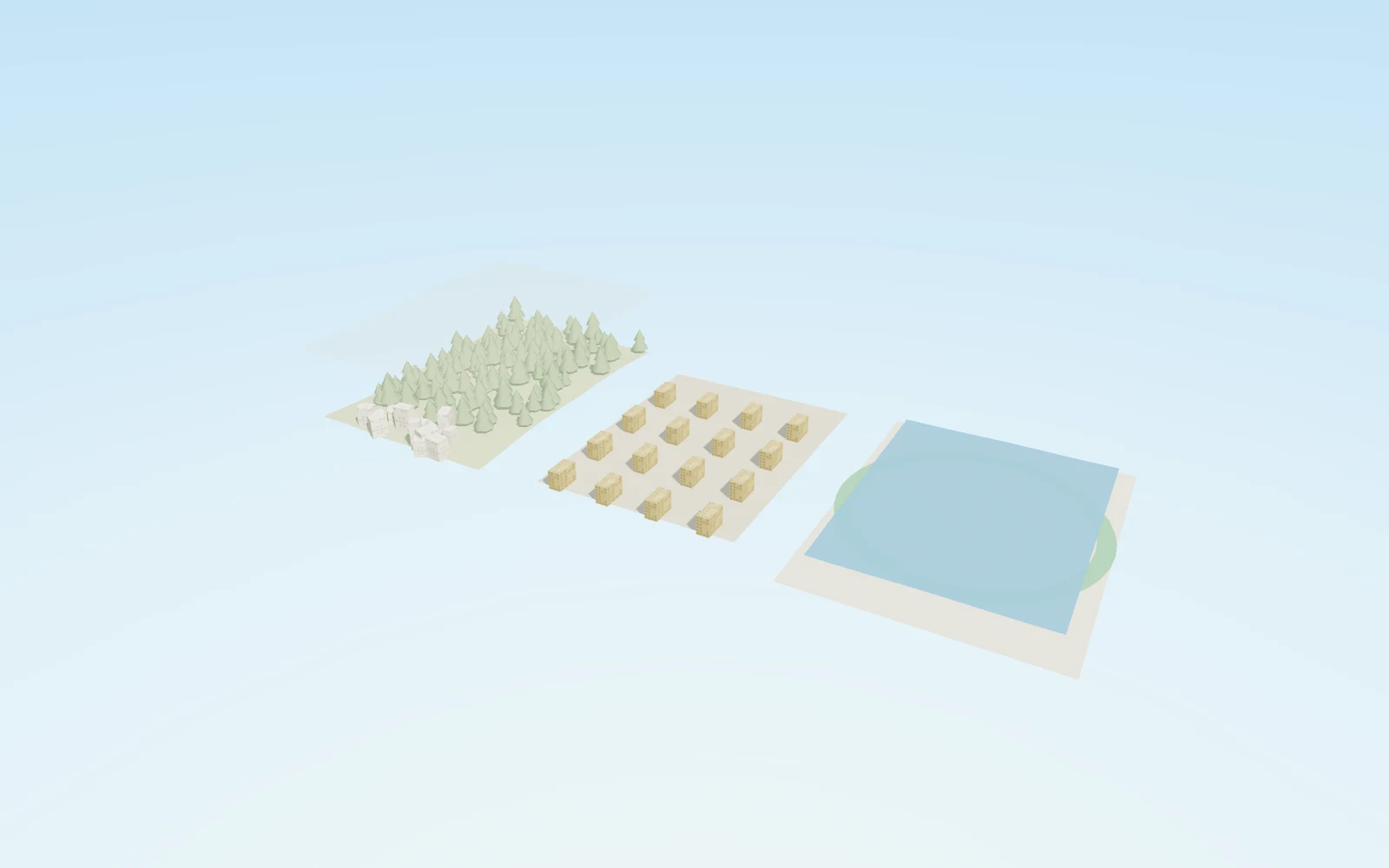
Vancouver Climate Futures investigates interactive exploration as a means of communicating climate risk and adaptation policy. The serious game draws methodological inspiration from Future Delta 2.0, a published place-based climate game developed through the University of British Columbia Okanagan. Implemented in Three.js for browser access, it connects documented evidence, adaptation decisions, and visible consequences across three Vancouver contexts.
System Architecture
Heat Vision represents a neighbourhood with limited tree canopy, Energy Vision addresses older rental housing, and Flood Vision focuses on the False Creek shoreline. A deterministic model calculates the consequences of each adaptation decision using cited municipal and provincial evidence. Its inputs include Vancouver's 4.6 metre coastal Flood Construction Level, approximately one metre of projected sea level rise by 2100, 619 deaths during the 2021 British Columbia heat dome, a documented neighbourhood canopy temperature difference of approximately 20 degrees Celsius, and the City's Rental Apartment Retrofit Accelerator program. Decisions produce visible changes in the three-dimensional scenes.
Usability Evaluation
Usability testing identified environmental occlusion by large interface panels and a disabled survey control that prevented progression without explanatory feedback. Revisions introduced a compact collapsible instruction panel, continuous camera control, and feedback identifying incomplete survey responses. The interaction sequence also provides time to observe environmental changes before presenting an explanation of the outcome.
Evaluation and Key Findings
The planned participant evaluation asks whether interactive causal exploration changes climate risk perception and policy support more effectively than a static presentation of equivalent information. The project includes a static control condition and an instrument for comparing the two conditions based on the validated New Ecological Paradigm scale. The statistical pipeline was tested with explicitly identified synthetic data containing a known effect. A separate computational evaluation covered all sixteen possible choice combinations and found no violations of the documented impact model.
Current Status
The study materials comprise a short initial survey, a sea level rise scenario, three adaptation decisions, and visible environmental outcomes. A companion static booklet presents the same evidence and choices without interactive simulation. Repository tests cover all choice combinations, survey scoring, and the statistical workflow. These materials support a future participant study; the synthetic data are not presented as empirical evidence of effects on participants.